In this post, get a back-to-school dental checklist for cleanings, toothbrushes, braces supplies, mouthguards, and tooth pain.
Common Brushing Mistakes That Can Damage Your Teeth
Most people brush their teeth without giving it much thought. It is part of the morning routine, part of getting ready for bed, and something that often happens while checking the time, helping a child find a shoe, or trying to remember whether the coffee has finished brewing.
Because brushing feels so familiar, it is easy to assume that more pressure, more toothpaste, or more time spent scrubbing means a better clean. However, a few common habits can leave plaque behind, irritate the gums, or gradually wear down enamel near the gumline.
The good news is that brushing mistakes are usually easy to correct once you know what to look for. A toothbrush should clean your teeth without leaving your mouth sore, your gums tender, or your brush bristles smashed flat after a few weeks.
At CarolinasDentist, we often talk with patients about small changes that make brushing more effective. Brushing should feel simple enough to stick with, while still giving your teeth and gums a thorough clean.
Brushing Too Hard
One of the most common brushing mistakes is pressing too hard. It can feel like stronger pressure must mean a deeper clean, especially after a sticky snack, coffee, or a meal that leaves your teeth feeling fuzzy. In reality, hard brushing can irritate the gums and wear down enamel near the gumline over time.
A toothbrush is meant to sweep plaque away, not scour the teeth like a kitchen brush. When bristles bend sharply against the teeth, they are not always cleaning better. Instead, the force can push the gums back or create worn-looking areas near the base of the teeth.
Some people notice this when cold water starts to sting near the gumline. Others see small notches or grooves where the tooth meets the gum. Those areas can become sensitive because the enamel is thinner there, and the inner part of the tooth is closer to the surface.
Try holding the toothbrush with a lighter grip, almost the way you would hold a pencil. Use small motions and let the bristles do the work. A soft-bristled toothbrush is usually the best choice for daily brushing because it can clean the teeth without being rough on the gums.
Using a Toothbrush That Is Too Hard or Too Worn Out
A firm toothbrush may seem like a better choice when teeth feel rough or stained, but stiff bristles can be tough on the gums and enamel. Hard bristles may feel satisfying in the moment, yet they can create irritation if they are used with pressure day after day.
A soft-bristled brush is usually enough to remove plaque when the technique is right. The bristles can bend slightly around the tooth and reach along the gumline without scraping the tissue. So, skip the medium bristle brush the next time you replace your toothbrush.
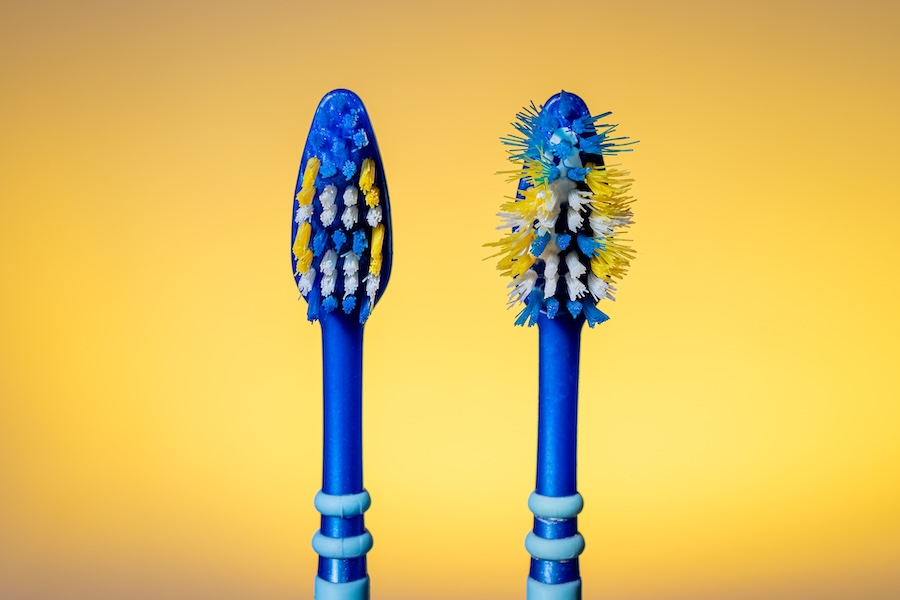
It is also easy to keep using the same toothbrush long after it has done its job. Once the bristles are bent outward, frayed, or flattened, the brush is less effective at cleaning. It can also encourage harder brushing because it no longer feels like it is reaching where it needs to go.
Take a look at your toothbrush every few weeks. If it looks like it has been through a rough season, it is probably time to replace it. Most people need a new toothbrush or brush head about every three months, and sooner if the bristles wear out quickly.
Missing the Gumline
Many people focus on the flat front surfaces of their teeth because that is what they see in the mirror. However, plaque often collects right along the gumline, where the teeth and gums meet. That area needs attention every time you brush.
Instead of brushing straight across the teeth only, angle the bristles slightly toward the gumline. Then use short, gentle strokes along the outer surfaces, inner surfaces, and chewing surfaces of the teeth.
The inside of the lower front teeth is one spot that gets missed often. So is the cheek side of the upper back teeth. It is easy to rush through those areas, especially when brushing at night after a long day.
You do not need to spend several minutes attacking one section of your mouth. Slow down enough to work around the gumline before moving on. A steady routine usually works better than a fast scrub that focuses only on the front teeth.
Brushing Only the Teeth You Can Easily See
It is natural to spend the most time on the front teeth. They are the teeth you notice in photos, during conversations, and when you look in the mirror. Still, the back teeth need just as much attention.
Molars have grooves and pits on their chewing surfaces where food and plaque can settle, creating decay. The back sides of those teeth can also be harder to reach, especially if you have a smaller mouth, crowded teeth, braces, or a strong gag reflex.
One way to avoid missing areas is to divide the mouth into sections. Spend time on the upper right, upper left, lower right, and lower left rather than brushing in a scattered pattern. This helps keep the routine from turning into a quick pass over the same easy-to-reach spots.
It can also help to start on the side you tend to skip. Many people begin brushing in the same place every day and lose focus near the end. Switching your starting point gives the last section of your mouth a better chance of getting cleaned thoroughly.
Rushing Through Brushing
A fast brush after lunch is better than skipping it altogether, but brushing in a hurry every day can leave plaque behind. Two minutes may not sound long, yet it gives you enough time to clean all tooth surfaces without racing through the routine.
Think about how often brushing happens while someone is distracted. You may be watching your child brush beside you, checking a text message, packing a lunch, or trying to get out the door before traffic builds. Those routines are real, and they can make brushing feel like one more task to get through.
An electric toothbrush can be especially helpful for most people because it does more of the brushing motion for you. Of course, two minutes is still the best target. However, if you are only managing about a minute on a busy morning, an electric brush can often get more plaque off in that time than a quick manual brush. Many models also have a built-in timer, so you get a reminder when the full two minutes are up instead of guessing that you have probably brushed long enough.
A regular toothbrush can still work very well. The main difference is giving yourself enough time to reach the front, back, chewing surfaces, and gumline. At night, brushing is especially important because plaque has more time to sit on the teeth while you sleep.
Brushing Right After Acidic Drinks or Foods
After orange juice, soda, sports drinks, lemonade, wine, or a sour snack, your mouth can feel like it needs to be brushed immediately. However, acidic foods and drinks can temporarily soften enamel. Brushing right away may add extra wear when the enamel is more vulnerable.
Instead, rinse with water and give your mouth a little time before brushing. Water helps wash away some of the acid and can make your mouth feel fresher without scraping at the teeth too soon.
This does not mean you need to overthink every sip of coffee or bite of fruit. It is simply a good habit to avoid brushing immediately after something very acidic. Waiting around thirty minutes is often a better approach.
The same idea applies if you have reflux or frequent heartburn. Stomach acid can affect enamel too, so rinsing with water first is usually gentler than brushing right away.
Skipping the Tongue
The tongue can hold bacteria and food debris, especially toward the back. When it is not cleaned, it can contribute to bad breath even when the teeth look clean.
You do not need to scrub your tongue aggressively. A few gentle passes with your toothbrush or a tongue scraper can help remove buildup. Start near the middle of the tongue and move forward rather than pushing the brush too far back and triggering your gag reflex.
Tongue cleaning is a small part of the routine, but it can make your mouth (and breath) feel fresher. It also helps you pay attention to what is happening in your mouth as a whole instead of treating brushing as a teeth-only task.
Using Too Much Toothpaste
A full stripe of toothpaste is not necessary for most adults. A pea-sized amount is enough. For younger children, even less may be appropriate depending on their age and whether they can spit.
Using more toothpaste does not improve the cleaning power of the brush. In fact, a big mound of foam can make people want to spit early, which cuts the brushing time short.
For children, toothpaste amount is especially important because young kids may swallow it. A small smear is usually used for toddlers, while a pea-sized amount is commonly recommended for children who are able to spit reliably.
Parents can help by putting toothpaste on the brush for younger children and staying nearby during brushing. Kids often need help reaching back teeth and cleaning along the gumline well into elementary school, even when they are eager to do it themselves.
Treating Brushing Like the Whole Routine
Brushing is important, but it does not clean between teeth. That is where floss, floss picks, water flossers, or other between-the-teeth tools come in.
Plaque builds up in the spaces where toothbrush bristles cannot reach well. If those areas are skipped every day, the gums may become tender or bleed when flossing eventually happens. Some people stop flossing because the gums bleed, but that bleeding can be a sign that the area needs more consistent cleaning.
The best tool is the one you can realistically use each day. Traditional floss works well for many people. Floss picks can be easier for kids, teens, and adults who struggle with wrapping floss around their fingers. Water flossers may be helpful for braces, bridges, implants, or anyone who prefers a different method. Brushing and cleaning between the teeth work together. One does not replace the other.
Common Brushing Mistakes and Family Dental Care in North Carolina
Brushing too hard, using worn-out bristles, skipping the gumline, rushing, and forgetting the spaces between teeth can all affect your smile over time. Small changes in technique can help protect your enamel, keep gums healthier, and make your daily routine work better.
CarolinasDentist has locations across North Carolina for families who want straightforward guidance on brushing, flossing, preventive visits, and dental concerns that are hard to sort out at home. If your teeth feel sensitive, your gums bleed often, or you are not sure whether your brushing routine is doing enough, call your nearest CarolinasDentist location to schedule a cleaning.
Related Posts